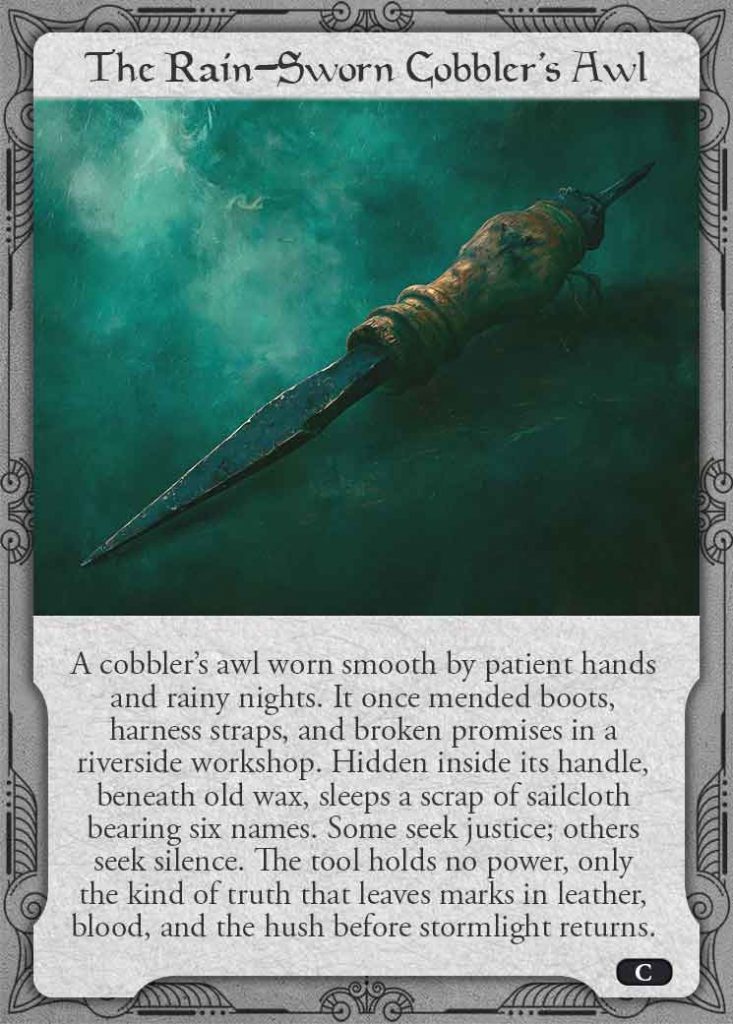
The Rain-Sworn Cobbler’s Awl
Background
Origin and creation
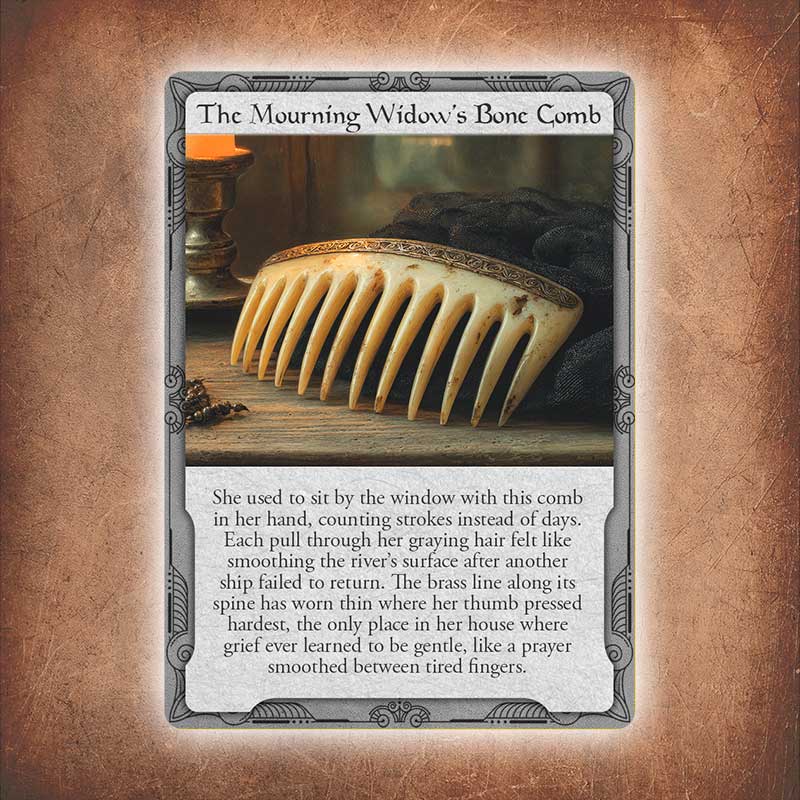
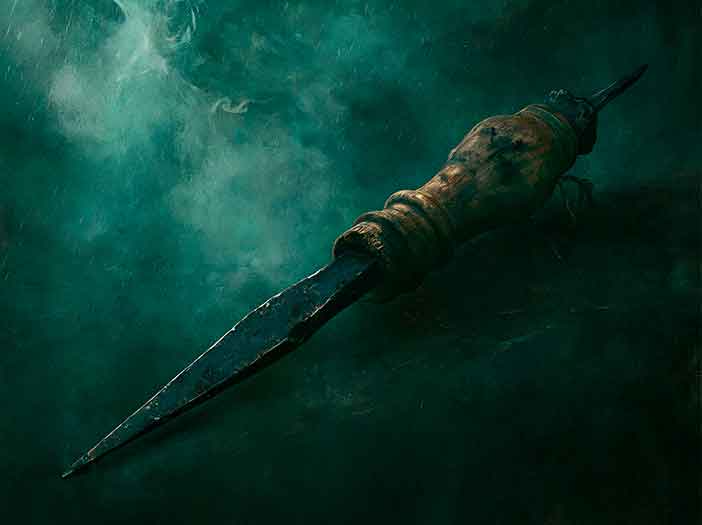
The awl was made in a riverside quarter where every trade depended on damp weather and patient hands. Its handle is plain dark wood, worn smooth by years of pressure, and its iron point has been sharpened more often than anyone can count. Old shoemakers say it was first given as a wedding gift to a cobbler who promised his bride that no traveler would leave their door with broken soles.
Everyday use / original function
For decades, the awl pierced leather boots, harness straps, mule tack, satchels, and the thick gloves of dockworkers who could not afford replacements. It lived beside a small oil lamp in a shop that smelled of wet wool, tallow, and scraped hide. People came there less because the cobbler was cheap and more because he listened while he worked, setting grief and gossip into the rhythm of stitch after stitch.
A hidden secret linked to the item
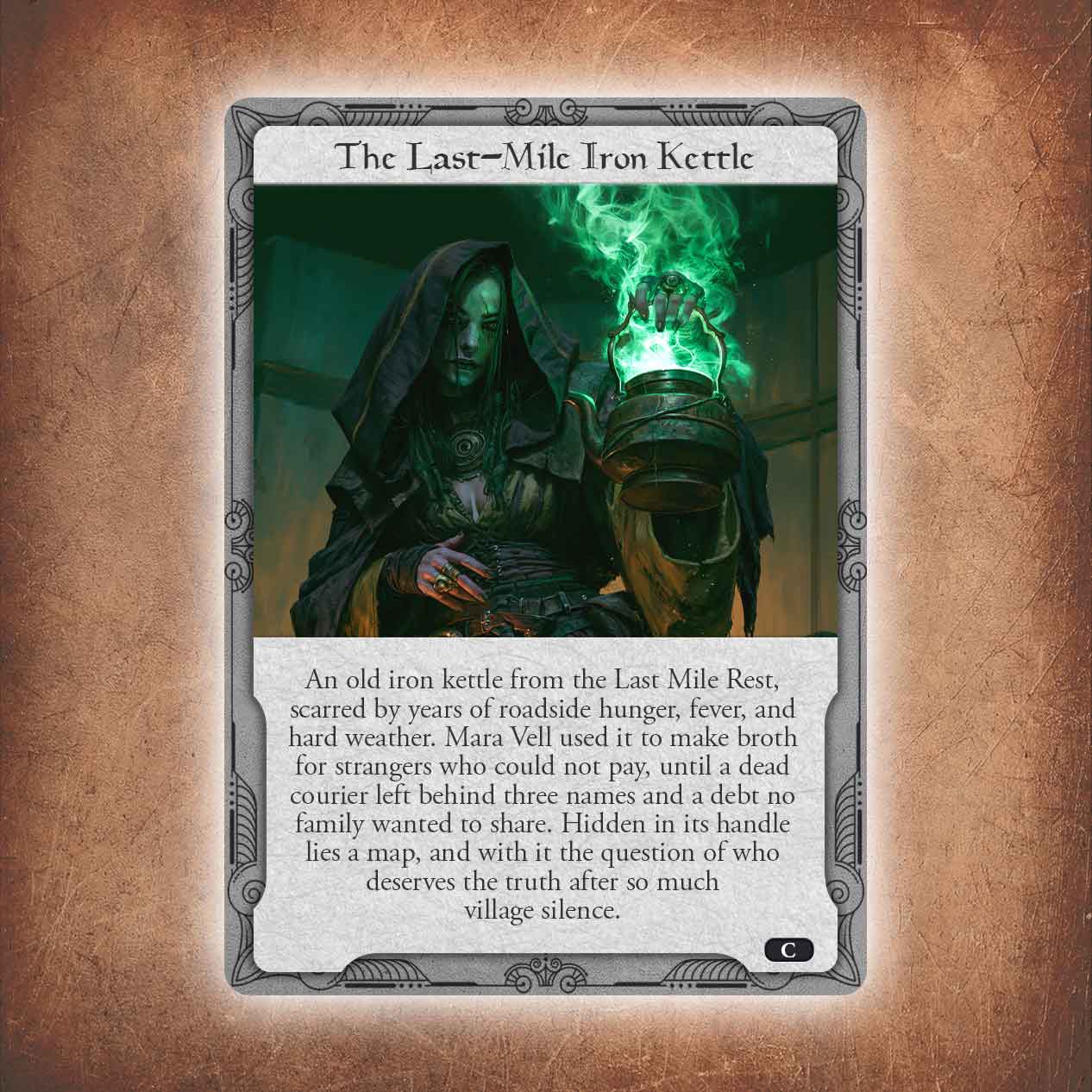
Inside the handle, beneath a plug of old wax, is a rolled scrap of sailcloth bearing six names written in a cramped hand. They are not customers, as most assume, but smugglers who vanished after betraying the wrong ferryman during a flood season. The last owner of the awl knew this and kept repairing boots for the descendants of those names, waiting for one of them to recognize the truth by the shape of a family scar.
Adventure Hooks
- A rain-soaked traveler offers the party the awl as payment, insisting it is worth more than coin in the next town downriver. When the characters arrive, three different families claim it belonged to them. None will explain why they want it until the town watch begins asking the same question.
- A cobbler’s apprentice begs the party to recover the awl from a pawnshop before her dying master notices it is gone. She believes the tool is only sentimental, but the pawnbroker has already found the sailcloth hidden in its handle. Now he is quietly selling the names to anyone with old grudges and newer knives.
- During a funeral, an elderly dockworker recognizes the awl in a character’s pack and spits at the ground. He says the tool “stitched shut six honest mouths” and refuses to say more in public. That night, someone leaves a pair of children’s boots outside the party’s door, each sole cut open with deliberate care.
- A merchant asks the party to deliver the awl to a monastery where abandoned tools are kept as memorials to the dead. Along the road, strangers keep offering repairs, shelter, or warnings in exchange for a look at it. Each encounter reveals another fragment of the flood-season betrayal, but also makes the delivery feel less like charity and more like burial.
- The descendants named on the sailcloth gather for a river festival, unaware of their shared inheritance. A quiet faction wants the party to expose the list before old alliances are renewed. Another wants the awl destroyed, not because it is magical, but because proof can ruin a family more thoroughly than any curse.
- A ferryman refuses passage to anyone carrying the awl, claiming his grandmother told him it belonged at the bottom of the river. He will relent only if the party helps retrieve a sealed strongbox from a collapsed boathouse. Inside is a ledger that makes the six hidden names seem less like traitors and more like scapegoats.
Rumors
- “That awl never broke, not once. I don’t mean it’s enchanted. I mean the old cobbler was too stubborn to let a tool die before he did.”
- “They say every boot mended with it found its way home. That’s tavern nonsense, of course, though plenty of widows kept the repaired boots by the door.”
- “There’s writing inside the handle. My cousin saw it. Names, he said, and not the kind you put on a customer ticket.”
- “The cobbler used to fix shoes for free on storm nights. Said no one should meet death with wet feet.”
- “A ferryman once tried to buy it with a silver ring, a mule, and half a bottle of pear brandy. The cobbler laughed him into the street.”
- “It belonged to a murderer. Or a witness. Around here, those words depend on who’s buying the ale.”
- “The last apprentice hid it because her master talked to it when the rain got heavy. Not prayers. Apologies.”
- “My father swore the awl was used to sew a false sole onto a smuggler’s boot, and that the false sole carried enough jewels to start a war.”
- “No one wants the tool. They want what it remembers.”
- “If you find six names in it, don’t read them aloud near running water. The river has too many friends.”
Optional: Minor Magical Version
This optional version presents the trinket as a very low-magic common item for tables that want a small supernatural touch while keeping it mostly narrative.
- Active (1/dawn): You can cast mending from the item.
Common Questions
Low resolution preview: